When searching for the holy grail turns dirty
Posted: 27 May 2026 Filed under: dementia, discrimination, human rights, Mediation, Older people | Tags: alzheimers, alzheimers-disease, dementia, family, health Leave a comment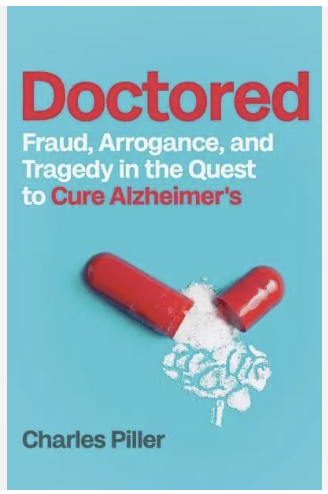
I’m currently reading Doctored: Fraud, Arrogance, and Tragedy in the Quest to Cure Alzheimer’s by investigative journalist Charles Piller (Icon Books, 2025). It’s a fascinating delve into the world of scientific research and publishing and the race to find effective treatments for Alzheimer’s disease. What Piller uncovers is a murky world of what he terms a ‘cabal’ of self-interested researchers and pharma companies. Alzheimer’s is the leading cause of dementia, a condition that 57 million people worldwide are living with (World Health Organisation). It’s easy to see why the profit potential might overshadow ethical concerns.
Recently in the UK we’ve had discussions about the drug lecanemab, used to slow the progression of Alzheimer’s disease. The National Institute for Clinical Excellence (NICE) originally declined to approve it for use in the NHS because it is expensive and not deemed to be a cost-effective use of public resources. NICE has now agreed to reconsider its decision.
I don’t want to get into the debate about whether it’s wrong for NICE not to approve it for the NHS. But it has highlighted an interesting point that isn’t being much discussed. With and without access to the new drug, people can, and do, live full lives with Alzheimer’s. We need to talk about the importance of supporting further medical research that can benefit people with Alzheimer’s while at the same time acknowledging that a diagnosis is not a death sentence.
One thing mediators are very good at is giving space to discussion of multiple ‘truths’, including the truth that drugs can bring benefits (as well as risks) and the truth that other kinds of support are invaluable in helping people with Alzheimer’s live life to the full. My article in the Journal of Mediation Theory and Practice, ‘ “I lost yesterday”: Dementia, Mediation, and Decision-Making’, shows how specialist mediators can help support people living with Alzheimer’s to make decisions about things that matter to them, and help those around them to do the same. It opens with the words of Wendy Mitchell, an amazing activist who acknowledged the grimness of her diagnosis with early-onset dementia but campaigned passionately for living well despite that. She died just months before my article was published. She’s the author of a blog and a number of books, including Somebody I Used to Know and One Last Thing – How to live with the end in mind. If Piller’s book had been around when she was still alive, I imagine she would have been outraged at what he unearthed about the dark side of research into Alzheimer’s drugs.

