Quality, not quantity: A welcome focus from the Chief Medical Officer in a report on our ageing society
Posted: 22 November 2023 Filed under: Equalities, Mediation, Older people, research, Statistics | Tags: communities, health, mediation, Older people, research, social care Leave a comment
There’s much of interest in this report on health and ageing by Prof Chris Whitty (Chief Medical Officer). One thing that struck me was the report’s emphasis on quality, not quantity, of life. Longevity is not his priority in this report; living a good life is. As expected, however, it’s heavily weighted towards the medical and biomedical rather than the social.
The need for robust research is highlighted, and Whitty notes that among the areas where we lack research is social care, where an evidence basis is needed to ‘help to support older people with some health problems to maintain independence and quality of life to the greatest possible extent’. I would go further and say that ‘social’ and ‘care’ are aspects of everyday life for all of us, and they are crucial to human flourishing. We need to harness the research evidence that exists on innovative ways to change how we talk about and organise care, ways that focus on flourishing and equalities. The grassroots movement #SocialCareFuture is an excellent place to start.
Whitty also highlights the geographical distribution of older people in England, with greater concentrations in less populated areas: ‘A large proportion of people migrate away from cities before they reach older age. The result is that metropolitan areas largely maintain their current demographic, ageing only slowly, while some areas, particularly rural, semi-rural and coastal areas in the periphery, age much faster’. Older people living in those areas are more likely to struggle with access to health care, transport and other services, and more likely to face a digital divide, highlighting the need to improve the infrastructure of support and address geographical inequalities.

We should also change the narrative about cities – they are super places for older people to live, but we often describe them as difficult, harsh, unfriendly, etc. They are not – they are full of friendly folks and a shared sense of community. Lots of opportunities to get out and about, see people, be part of the world. Green spaces too. Accessible buses. Kerb ramps. No need to have a car. Lots of free things, including free dementia-friendly workshops at museums like the V&A. Volunteering opportunities. I’m a big fan of cities as good places in which to age.
Whitty notes that ‘improving the environment for older adults includes issues around urban planning, building design, social care and aids to independent living’. We can do more, especially in terms of intergenerational fairness. Cheaper public transport is crucial, so everyone can afford to get around. Better, more affordable housing for young and old both, with a range of supported options for older people. Facilitated houseshares between young and old. Cleaner, safer streets. Reimagined social care along the lines of the vision set out by #SocialCareFuture. ‘Chat’ benches in public spaces. Community toilets. And much more.
And, of course, I would argue that all communities need access to specialist mediation services for older people, to help resolve issues that older people often face in terms of accessing services, staying in work, organising support. I’ve written here about the wide-ranging applications of such specialist mediation and its place in improving the lives of older people. There is a natural affinity between mediation and the interactions between and among people and communities and with the institutions and government bodies involved in social care and health care.
Health is an important issue for an ageing society. But it looms disproportionately large in the public imagination, something that is reflected in the current government’s priorities for legislative reform and funding. What we need is an equally large focus on the social.
Health in an Ageing Society: The Chief Medical Officer’s Annual Report 2023
60 Propositions for furthering mediation – report from the 2nd International Congress on all Mediations
Posted: 28 September 2023 Filed under: administrative justice, administrative mediation, Dispute resolution, human rights, international, mandatory mediation, Mediation, system design | Tags: 2nd International Congress on All Mediations, citizens, conference, dispute resolution, mediation Comments Off on 60 Propositions for furthering mediation – report from the 2nd International Congress on all MediationsLast year, at the 2nd International Congress for all Mediations held in Angers, France, I contributed to a roundtable discussion on mandatory administrative mediation (see post here). With colleagues from France and Spain, I discussed the uses of mediation in disputes involving individuals and public bodies, disputes that often involve key public services and fundamental social rights.
The official report of that Congress has now been published, and it contains 60 propositions for developing mediation in a wide range of areas, from climate issues and violence against women to schools, health care, neighbourhoods, and public administration.
I was pleased to see that the propositions put forward from the session on administrative mediation do not include a recommendation for mandatory mediation – there was lively debate at our roundtable on this topic. They do, however, recommend mandatory mediation information sessions for parties, along the lines we currently have in England for disputes about special educational needs and disabilities (SEND) and divorce and separation. The aim of such information sessions is to ensure that parties in dispute have the opportunity and knowledge to make an informed choice about whether or not to use mediation.
Administrative mediation as a means of humanising state bureaucracy
I was also pleased to see that the administrative mediation propositions reflect arguments I made at the Congress for mediation to be used as a resource for fostering a better, more trusting citizen-state relationship, one that prioritises listening and participative democracy. Proposition 43 states clearly that prior to introducing mandatory mediation, it is necessary to embed a culture of ‘humanization of the bureaucracy, reasonable public decisions, listening and trust’.
This proposition reflects the themes in the book I co-authored with Nick O’Brien, who is also a practitioner in administrative justice (tribunal judge in the SEND and Mental Health Review Tribunals). In Reimagining Administrative Justice: Human rights in small places, we set out a reimagined administrative justice landscape, one less constrained by legalism and more closely aligned with human rights and social rights, with what we call a ‘mediation mentality’ at its core.
The report and the 60 propositions
The full report, in French, is available to view or download below.
Below is a summary of the session on administrative mediation, including propositions arising from that session. (I don’t read French, so the translation is courtesy of Google Translate.)
DEVELOPMENT OF ADMINISTRATIVE MEDIATION
How to develop prior mediation and mediation at the initiative of the judge? Does the obligation to mediate contribute to its democratization?
Moderator: Rhita Bousta, Doctor of Law – University of Paris I Panthéon-Sorbonne, HDR lecturer at University of Lille (France).
Speakers: Amaury Lenoir, National Delegate for Mediation for Administrative Jurisdictions COUNCIL OF STATE, Mediation Referent at the Administrative Court of Nice, Mediator (France); Manel Canyameres Lawyer-Mediator (ALTERSIM Firm) (Spain); Margaret Doyle Independent mediator specializing in disputes involving equality issues, researcher in the field of public sector dispute resolution and administrative justice (UK); Bertrand Maréchaux, Mediator, honorary prefect, head of the “administrative mediation” commission of the ANM (France).
The Council of State recalled the benefits of mediation for resolving or preventing a dispute, creating or re-creating social bonds. However, he notes that the actors concerned are still too often hesitant to resort to mediation, even when it is offered to them by the administrative judge. Thus, by requiring those mediated to contact a mediator before being able to refer the matter to the administrative judge, the MPO is an accelerator of the development of mediation in the pre-litigation phase where it is, by nature, more timely and more effective.
In England, the MPO was recently introduced in two areas: on the one hand, conflicts between local government and families over the education of children with disabilities (“SEND”); on the other hand, as a condition for judicial referral for civil disputes for an amount less than £10,000. Also, mediation with a public administration is not only a quick and inexpensive procedure for the parties: the MPO should be based on the interest of all (good management of public funds, good administration).
This procedure raises more pronounced reluctance in Spain. Although it seems ruled out for the moment, a reform establishing compulsory mediation in the area of civil procedure is, however, on the verge of being adopted. Unlike France, it is liberal mediators who are called upon in Spain: the prospect of an MPO with an administration supervised by an institutional mediator is very unlikely.
It is therefore the legal and administrative culture which is the key element of reflection. In France, administrative mediation and the MPO in particular, while desirable, still encounter numerous obstacles coming both from the State, a public “power” disinclined to negotiate, and from magistrates or lawyers sometimes opposing in a binary manner the law (to prevail) and the equity. The two-headed elected official/official within local authorities and the legitimacy derived from universal suffrage would also sometimes make the MPO difficult for an administration to accept.
What assessment can, at this stage, be made of the MPO with a public administration? What legal environment is favorable, or even necessary, for its viability?
This involves ensuring a profound change in administrative justice towards participatory and collaborative justice; humanization of the bureaucracy, reasonable public decisions, listening and trust: this context must precede the development of the MPO.
Proposition No. 42:
Recommend that central or decentralized state services systematically accept a request for mediation sent by the judge? The choice of mediation should also be made based on the complexity or even the stakes of the case.
Proposition No. 43:
Remove certain administrative burdens and open the “Télérecours” software to mediators. Beyond these observations, Mandatory Preliminary Mediation (MPO) must not make us forget that mediation is a state of mind before being a procedure, the ideal remaining to prevent conflict. It is, firstly, a matter of ensuring a profound change in administrative justice towards participatory and collaborative justice. Humanization of the bureaucracy, reasonable public decisions, listening and trust: this context must precede the development of the MPO.
Proposition No. 44:
For mediations initiated by the judge: create an injunction to meet with a mediator (IRM) already used by magistrates of the judiciary. This should make it possible to develop the number of disputes referred to mediation by the administrative judge, which represented, in 2021, 1% of the cases brought before the administrative courts (approximately 2,200 mediations).
Proposition No. 45:
Establish, as an alternative to the MPO, the injunction to attend an information session ordered by the judge, information then delivered in a court room by a mediator to the parties and their lawyer in the respect for the principle of confidentiality. Although some see this as a decline in the freedom of the parties, this alternative would be a more effective way than the MPO to keep mediation in the hands of the mediators.
Guest blog: Margaret Doyle on the role of mediation in adult social care
Posted: 30 May 2023 Filed under: Uncategorized Comments Off on Guest blog: Margaret Doyle on the role of mediation in adult social careMediation has an important role in disputes involving adult social care, but it is not well understood or well used. Can we change that, and can we adopt a mediation mindset in public services?

In this blog post, Margaret Doyle explores how adopting mediation in complaints about social care can contribute to the much-needed reimagining of an area of life in which human rights are engaged and which is crucial to human flourishing.
The role of mediation in complaints about adult social care
‘The English system of social care—the poor relation to the NHS since 1948—is underfunded, unreformed and palpably inadequate at meeting the needs of an ageing population. This problem has worsened over a generation and has been dodged by both main parties, though the position has become particularly acute as a result of austerity.’
‘Beveridge at Eighty: Learning the Right Lessons’, Gavin Kelly and Nick Pearce
The Political Quarterly, 3 January 2023[1]
There has been a flurry of recent reports on social care reform in England in the face of continued inaction by the UK Government. Among these are ‘Care…
View original post 2,356 more words
Report from Angers – mediation in citizen and state disputes
Posted: 13 March 2023 Filed under: administrative justice, administrative mediation, comparative, conference, human rights, international, mandatory mediation, Mediation, Mediation styles, ombuds, Special educational needs, system design | Tags: administrative mediation, Angers, International Congress for All Mediations, mediation 1 Comment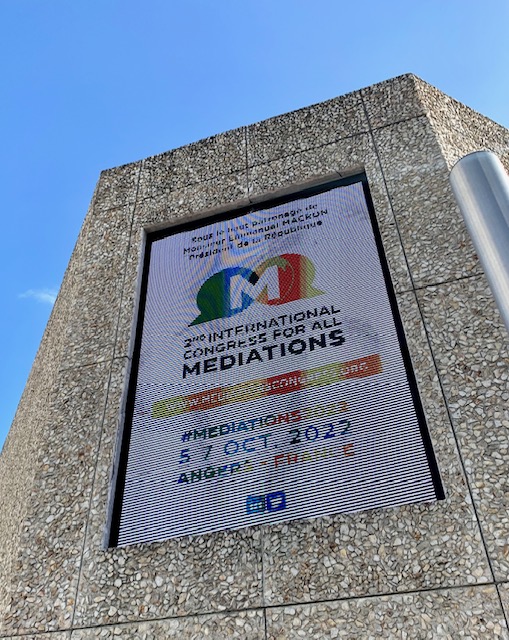
This post reports on the 2nd International Mediation Congress, held in Angers, France, on 5-7 October 2022. Many of the conference sessions explored the role of mediation in citizen-state disputes, including ‘civic mediation’ for collective community disputes and the use of mediation in school-based disputes. The author of this post participated in a conference roundtable discussion on the question of mandatory mediation in administrative disputes, particularly involving social security appeals, public-sector employment disputes, and challenges to decision-making on special educational needs and disabilities. The participants compared attitudes to mandatory mediation from the French, Spanish, and English perspectives.
Mediation and citizen rights
How refreshing to hear mediation being described as opening up access to rights. In her opening speech to the 2nd International Mediation Congress in Angers, Claire Hedon, the Défenseure des Droits for France, described the way her ombud office – and its team of 550 ‘institutional’ mediators across the country – uses mediation to challenge discrimination in housing, address conflict within cities, and secure provision for education support for disabled children. She also described the way, through its mediation work, the ombud acts as a contact point between agencies and authorities, opening up a dialogue that ensures a holistic and networked response to citizen grievance.
The Défenseure des Droits is the national ombud and human rights organisation for France[1]. Her office was involved in a pilot project using mandatory mediation for what are called ‘administrative disputes’, or disputes between citizens and public authorities. The MPO (mandatory prior mediation) pilot involved free mandatory mediation in disputes raised by public employees and those raised by applicants for social security benefits. The pilot was conducted over two years, and the findings from the pilot assessment are examined in a recent report:
‘…it emerges from this experiment and in particular from the qualitative study carried out by the Observatory of the Defender of Rights among claimants followed by the institution from 2018 to 2020 (“Use of mandatory prior mediation: study with claimants”, June 2021), that the MPO is a device that allows new access to rights, in particular for people who would not have gone to court. The mandatory prior mediation system can thus offer a vulnerable public, for whom access to a judge is often difficult, the possibility of free mediation devolved to a neutral, impartial and independent third party. In doing so, it opens up a real space for dialogue conducive to access to rights, whether it is access to information on the right and benefits, access to the benefits themselves and, where applicable, access to the judge.’[2]
One of the conclusions reached by the ombud office is that with increased digitalisation and remoteness of decision-making by public bodies, mediation can offer a much-needed opportunity for in-person dialogue:
‘In conclusion to this study, the Defender of Rights points out that: “people who have used the MPO procedure say that they have found with the Defender of Rights’ delegates an attentive ear and an opportunity for dialogue which they lacked in the context of their ordinary “relationships” with the bodies whose decision they contested. At a time of the dematerialization of public services and the dehumanization that it often entails, this reminds us of the need for direct, oral and even often “face-to-face” contact to allow users to be heard and to assert their rights”.’[3]
A discussion by Sophie Boyron (University of Birmingham) of the mandatory mediation pilot[4] can be found on the REALaw blog here.

Administrative mediation roundtable
Rhita Bousta, Lecturer in Public Law at the University of Lille, was the moderator for the conference roundtable on mandatory administrative mediation. Professor Bousta is the author of The notion of administrative mediation (Harmattan, Paris, 2021) and is an expert in administrative comparative law and human rights. She discusses administrative mediation in an interview for Lexbase Public Review[1] and in a piece on the REALaw blog.[2]
Speakers in the roundtable included Amaury Lenoir, National mediation delegate for administrative courts at the Conseil D’Etat and Referent mediation at the Administrative Court of Nice. Amaury discussed the outcome of the MPO pilot and the benefits of mandatory mediation in this context. He reported that during the pilot, more than 4,800 mandatory mediations were conducted, with a success rate (agreements) of nearly 76% and an average duration of less than two months. The findings of the pilot fed into Parliamentary debates on new legislation that puts the provision of mandatory mediation on a permanent basis in relation to disputes involving public-sector employees (the Pôle emploi), education (the Ministry of National Education) and social security (the management centers of the territorial public service).
Also speaking from the French perspective was Bertrand Maréchaux, a mediator and honorary prefect, head of the administrative mediation commission of the ANM (National Association of Mediators) and retired judge. Bertrand considered the obstacles to administrative mediation in France. He suggested that a cultural attachment to the law and legalism, as well as to the written word, hinders the take-up of mediation: ‘it is the written word and the legal reasoning that must take precedence. Fairness cannot take precedence over law,’ he said. Other obstacles are the perceived legitimacy of the state and the decision-making of public authorities, which is often considered not to be amenable to negotiation; and the need to deliberate on the agreement, or even have it approved by the court, hampering decision-making within mediation.
The position in Spain was explored by Manel Canyameres, a lawyer and an independent mediator, who explained that there is a distinction to be made between external (known as ‘liberal’) mediators and institutional mediators. In Spain, the latter are the ombuds or sindicos (territorial mediators). However, when administrative disputes are mediated, these mediations are conducted by external mediators. In his view, this distinction is important in the context of disputes between citizen and state, particularly when discussing mandatory mediation. Although Spain has not introduced mandatory mediation for administrative disputes, progress has been made: there are no limits on the types of disputes that can be mediated, and each Autonomous Municipality of Spain (territorial division like the Departments in France) has made it possible to implement mediation ‘within the jurisdictional framework’.
I contributed a view from the UK – or more accurately, from England, where mandatory mediation has been proposed by the Ministry of Justice, for small claims in county court, and by the Department for Education, for disputes involving special educational needs and disabilities (SEND). My point is that in adopting the claims made for mediation in civil and commercial disputes (that it is faster and cheaper), policy-makers in administrative justice disputes devalue what mediation can offer in citizen-state disputes and fail to take account of the ways that these areas of dispute often involve fundamental rights and issues of trust and a wider public interest.
In the special educational needs and disabilities (SEND) context in England, mediation remains voluntary, although there is a current requirement to consider mediation before lodging an appeal to tribunal, and there is a proposal to require participation in mediation. The impetus for mediation in this context is usually a challenge to a specific local authority decision that can be appealed to the Tribunal, but in reality the mediation encompasses a multiplicity of issues that go beyond the grounds for appeal, reflecting the ongoing relationship between families and schools and local government. It is not only the interests and needs of the parties attending that have to be taken into account. Collective interests are inherent in the duties that local authority SEND teams have for accounting for use of public funds, in schools’ needs to be supported, and in the needs of all pupils in the community to have access to inclusive education. Mediation in this context is not necessarily a cheaper faster alternative to the tribunal. Instead, it is a means of democratic co-design that offers the promise of addressing both individual and collective needs; it is essentially about connection, and it embraces conflict as a positive force for change.
Yet UK Government policy for the past 25 years has set out to promote mediation and other informal mechanisms of resolution as an answer to the perceived ‘problem’ of overcrowding in, and lack of access to, the formal justice system. What is needed, however, is an integrated network of complementary approaches that embraces a form of mediation that is more than about resolution or settlement. This shift does not prioritise cost and speed; instead it prioritises principles of openness and community interest that are compatible with fostering democratic engagement and accountability, mutualism and difference.
At the roundtable, participants expressed a range of views about mandatory mediation and questioned what is meant by ‘mandatory’. In England, as elsewhere, there are requirements to consider mediation in some areas of dispute (family, SEND), but so far no requirement to engage in the mediation process. Some mediators take the view that because settlement is not mandatory (ie the parties always have the option to leave mediation without reaching an agreement), there is no contradiction between mandatory participation in mediation and the values of voluntariness and self-determination that are fundamental to the process.
There were also widely shared views about the role that mediation has in administrative disputes. Rhita Bousta noted in the previously cited interview with Lexbase Public[3] that in the context of citizen-state disputes, mediation should not be positioned as an alternative to the courts but as a distinct and complementary process.
Pedagogical mediation
One of the concepts that has been discussed in the context of the MPO pilot is that of pedagogical (or educational) mediation. This is when the public authority does not agree to change its initial decision (the decisions being challenged by the individual citizen or groups of citizens), but the mediation offers an opportunity to clarify the reasons for the decision. A successful outcome described as ‘educational mediation’ therefore is one in which the decision is accepted by all parties.
We lack this concept in the UK; although such outcomes are achieved in mediation, they are often considered by the individual and his or her legal representatives as a concession rather than a successful outcome. A concept of ‘educational‘ or pedagogical mediation requires much greater public confidence in decision-making by public authorities than is currently experienced in England.
Sophie Boyron discusses this concept of educational mediation in a blog post on REALaw in November 2022, in which she notes that more research is needed on this and other aspects of administrative mediation. ‘To work’ , she writes, ‘educational mediation would need to be part of a wider package of measures to re-acquaint and reconnect the public with public administration and its public employees.’[1]
If we are to position mediation as more than a settlement mechanism, we should embrace the idea that in some cases (where decision-making is robust and transparent) the dialogue in mediation will result in better understanding, and acceptance, of the public authority’s decision. Mediation in this sense is therefore more than mere dispute resolution or the creation of a safe space for negotiated justice. It becomes instead a technique for allowing citizens’ voices to be heard, for constructing bridge-building dialogue and for the restoration of relationships that are public and institutional rather than private and personal. In order to achieve that, there needs to be a channel by which lessons learned in mediation can feed upstream, back into initial decision-making, in order to improve decisions and derive benefit from mediation’s preventive potential.
One fascinating outcome of the roundtable discussion on mandatory administrative mediation is the recognition that mediation and initial decision-making are intertwined. Although in the UK we are far from accepting mandatory mediation in administrative justice contexts (compared with wider acceptance of it in civil and commercial disputes), it is clear that any attempt to harness the added value that mediation can bring requires improved initial decision-making by public authorities.
Where next for administrative mediation in the UK?
The pockets of administration where mediation currently takes place across the UK make up an ad hoc patchwork of isolated areas of practice – education, tax matters, planning, health care. Each government body that engages in mediation to resolve disputes with citizens develops its own set of procedures and practices. For example, the NHS uses mediation for a large number of clinical negligence claims, through its NHS Resolution scheme, which contracts with an independent mediation provider. Others employ in-house staff trained as mediators, such as the Parliamentary and Health Service Ombudsman. Some administrative mediators are specially accredited, such as in special educational needs, but most are not. Very little public reporting is done by any of the administrative mediation schemes in existence.
What is needed is initial scoping research to identify how, and for which disputes, administrative mediation is happening in the UK. A next step would be to take on board the recent work by the Council of Europe’s European Commission for the Efficiency of Justice (CEPEJ), in its survey member states and subsequent guide to administrative mediation, which is not well known in the UK.[1] Collaboration on creating a public-sector mediation model could be an innovative exercise in design thinking, employing fresh thinking on orthodoxies such as confidentiality and the role of ‘settlement’ as well as explorations of mediation’s added value in disputes involving wider public interest, human rights and equalities, and collective citizen grievance.
Margaret Doyle is a Visiting Research Fellow at the University of Essex School of Law and an independent mediator. She has conducted research on the use of mediation in small claims, in judicial review, in ombuds practice and in education. She is the co-author, with Nick O’Brien, of Reimagining Administrative Justice: Human Rights in Small Places (Palgrave Macmillan, 2019).
[1] A recent area of the Défenseure des Droiuts’ work involves receiving complaints from Liverpool football fans about their treatment by French security forces at the Stade de France stadium on 28 May 2022. The work of the Défenseure des Droits in relation to security forces is explained in this English-language leaflet: https://www.defenseurdesdroits.fr/sites/default/files/atoms/files/dep-deonto-100×210-eng-num-05.22_01.pdf.
[2] Ibid.
[3] S Boyron, “Experimenting with compulsory mediation: assessment and continuation”, REALaw.blog available at https://realaw.blog/?p=1225
[4] ‘What news for administrative mediation?’, Interview with R Bousta, Yann Le Foll, available at https://www.lexbase.fr/article-juridique/74610888-document-elastique
[5] R Bousta, “Mediation in administrative justice. A comparison between French and Spanish laws in a nutshell”, REALaw.blog available at https://wp.me/pcQ0x2-uf.
[6] ‘What news for administrative mediation – Questions to Rhita Bousta, Lecturer – HDR in public law, University of Lille’, interview by Yann Le Foll, editor-in-chief of Lexbase Public, December 14, 2021, available at https://www.lexbase.fr/revues-juridiques/74610888-document-elastique#OpenLink
[7] S Boyron, ‘A welcome spotlight on administrative mediation’, https://realaw.blog/2022/11/22/a-welcome-spotlight-on-administrative-mediation-by-s-boyron/
[8] CEPEJ, ‘Promoting mediation to resolve administrative disputes in Council of Europe member states’, December 2022, https://rm.coe.int/cepej-2022-11-promoting-administrative-mediation-en-adopted/1680a95692
SEND reforms: Mandatory mediation in administrative justice
Posted: 17 October 2022 Filed under: Uncategorized Comments Off on SEND reforms: Mandatory mediation in administrative justiceThe newly published and long-awaited SEND Green Paper proposes ‘strengthening redress’, including making mediation mandatory in appeals of local authority decisions on special educational needs and disabilities (SEND). This post, originally published by the UK Administrative Justice Council, explores why this proposal should be a concern to all those involved in administrative justice.

SEND reforms: Mandatory mediation in administrative justice

The newly published and long-awaited SEND Green Paper proposes ‘strengthening redress’, including making mediation mandatory in appeals of local authority decisions on special educational needs and disabilities (SEND). This post explores why this proposal should be a concern to all those involved in administrative justice.
Background
Special educational needs and disabilities, known as SEND in England, is an area often described as a battleground and a crisis. It has been the subject of inquiries by the Commons Education Select Committee and investigations by the Children’s Commissioner (most recently a study of education, health and care plans) and the Local Government and Social Care Ombudsman. It has seen major legislative change, most recently with the Children and Families Act 2014. It is now facing more change following a review carried out by the Department for Education, published on 29 March 2022 as…
View original post 2,957 more words
Introducing the first EMIN-certified elder mediator in England!
Posted: 28 March 2022 Filed under: Ageism, Disability, discrimination, Equalities, Mediation, Older people, Vulnerability | Tags: Certification, Elder mediation, Elder Mediation International Network, mediation, Resolution Foundation 1 CommentI’m thrilled that I’ve been certified by the Elder Mediation International Network (EMIN) as an elder mediator, having completed my training (in two years, during Covid, no less!) and successfully fulfilling the robust accreditation criteria and process of this important international network.
‘Congratulations to Margaret Doyle who has just successfully completed all the requirements for the beginning level of Elder Mediation International Certification. Margaret becomes the first Elder Mediator in England to achieve the newly established Cert.EM designation!’
https://elder-mediation-international.net/meet-emins-latest-cert-em-advanced-recipient-2-3/

As a network, EMIN raises awareness of elder mediation as an important area of specialist mediation expertise and, through its certification process, ensures that certified mediators adhere to a code of ethics and conduct their practice to a consistent, credible, recognised international standard.
Age in the UK
And to be the first mediator certified by EMIN in England is the icing on the cake (not the first in the UK – the first UK-based EMIN mediator is in Northern Ireland).
The field of elder mediation isn’t well known in the UK, but it’s thriving elsewhere in the world – including Canada, the US, and Australia. Yet the issues that elder mediation focuses on – ageing and all the pleasures and pains that go with it – are as pressing here as in most countries across the world. According to the Office for National Statistics, UK life expectancy at birth in 2018 to 2020 was 79.0 years for males and 82.9 years for females. Our population is ageing, with our demographics shifting towards older ages because of declining fertility rates and people living longer. The ONS projects that by 2032, nearly 20% of the population in the UK will be of pension age or older.
These projections aren’t uniform across the UK. As the Resolution Foundation has explained, in its report Ageing Fast and Slow, Britain has experienced demographic divergence, with older places ageing faster than younger ones and younger places getting old at a slower pace (or actually getting younger).
Such demographic divergence matters for local government, the Foundation points out. It also matters for the services for older people administered by local government, because ‘revenue streams often do not match well with the service requirements of local populations of very different – and ever more different – ages’. There are tensions built into demographic change and divergence in the UK, tensions that can lead to disagreement and dispute.
What is old?
What is ‘old’ is a fluid and contentious topic. Here in the UK, ‘old’ might be over 50, the age at which we become eligible for sheltered accommodation. Or it might be 60, when those of us who live in London become eligible for a ‘Freedom Pass’ allowing free travel on tubes and buses. Or it might be the age at which we can start taking our state pension – for some that’s still 65, but for younger groups it’s 66, 67, and going up all the time. Or ‘old’ might be 70, the proverbial three score and ten, or 80, the age at which people were required to shield in the first lockdown of the pandemic.
I’m not overly concerned to define ‘old’, nor am I keen on terms like ‘elder’, and certainly not ‘the elderly’. What I am concerned with is that as we age, we are well supported to live the lives we want to live and we aren’t dismissed, patronised, or excluded. This isn’t about autonomous independence, but about relational independence: living as independently as we want to within reciprocal relationships, whether those be relationships of care or friendship, at home or within our communities, or with the state agencies with whom we interact.

Why ‘elder’ mediators?
I’ve been a mediator for more than 30 years, and I’ve specialised in disputes involving equalities and specifically disability rights. Although I can now be considered an elder myself, not all mediators are older people, nor do they need to be. But they do need to understand issues and concepts that might not arise in other areas of mediation practice.
The requirements for EMIN certification include being an already accredited mediator and undertaking additional specialist training (70 hours minimum) on issues including elder abuse and safeguarding, family and intergenerational dynamics, legal issues including powers of attorney and guardianship, and dementia. For my area of practice, I need to understand how social care works, including funding of long-term care. And elder mediators need to be curious and engage with questions about how we perceive vulnerability and the way ageism impacts decisions made with and for older people.
How can mediation contribute?
I believe that mediation can contribute to much-needed conversations and ideas about ageing. The underlying principle of participation and supported decision-making is key to mediation. It is also key to the theory, if not always the practice, of work done in social services, health care, including mental health, and disabilities services, including another area in which I work, that of special educational needs and disability rights. The social model of disability rights is one that can be adopted in age rights as well; it moves us away from a medical model, one that focuses on impairment, and explores and addresses the barriers (both physical and attitudinal) that compromise people’s ability to flourish.
Many of the techniques used in mediation are those used in a Strength-Based Approach used by social care professionals, which explores in a collaborative way the entire individual’s abilities and their circumstances rather than making the deficit the focus of the intervention. It is about gathering a holistic picture of the individual’s life, including from their network and other professionals.
So there is a natural affinity between mediation and the interactions between people and the institutions and government bodies involved in social care and health care.
Who uses elder mediation?
Families, friends, community groups, care homes and agencies, hospices and hospitals – all can make use of elder mediation where disagreement about care or decision-making is affecting quality of life and relationships.
It isn’t just about resolving individual disputes and disagreements. It’s a practice and approach that contributes to better listening and more shared experience. It’s also not always about, or only about, ageing; it can also be about intergenerational dynamics and frictions, about fairness between the young and old, and about the need for better, more creative conversations between generations and within communities.
I look forward to working with individuals, communities, and care and health organisations in this new area of practice!

Ageism – spotlight on the last taboo
Posted: 28 February 2022 Filed under: Ageism, Covid, discrimination, Equalities, Mediation, Older people, research, Vulnerability | Tags: Ageism, Equalities, mediation, World Health Organisation 2 Comments
‘Once I went to a store to buy a book about Alzheimer’s disease and forgot the name of it. I thought it was funny. And it was, at the time.’
Nora Ephron, I Remember Nothing
A study published last year found that across the world, 1 in 2 people hold moderately or highly ageist attitudes. It’s no surprise really, especially when you include in ‘ageism’ jokes along the lines of Ephron’s, jokes about memory loss and ‘senior moments’. Face it, we find these funny. Until we don’t. And often we lose our sense of humour when, as Ephron notes, the joke starts to be on us.
In many ways ageism is the last taboo, the tolerated ‘ism’. The report on the study of ageism, published by the World Health Organisation and the United Nations in March 2021, explains how insidious ageism is, worldwide – insidious yet largely unrecognised and unchallenged. Ageism applies to both the young and the old, but there is far more research on how it relates to older people. The report analyses what research exists and what it tells us about how prevalent ageism is, where it happens, the impact on health, well-being and economies, and what we can do about it. Its publication is timely, given what we’ve learned from Covid about ingrained narratives on the perceived vulnerability of older people and the way ‘older people’ have been treated as a homogenous group needing protection, whatever their circumstances or wishes.
Yet the opposite is true. When you’ve seen one older person, you’ve seen one older person. One of the most interesting findings in the report is that that ‘the longer we live, the more different from each other we become, making diversity a hallmark of older age’ (p.19). I see that illustrated in the lives of the older people in my life; regardless of chronological age, they approach life, and risk, very differently, and being older in years does not necessarily mean being more risk averse or frightened.
A global issue on several dimensions
Ageism plays out in three dimensions – the institutional (settings such as health care, the media, education, work), the interpersonal (in attitudes and behaviours) and in ourselves, as self-directed ageism. Unfortunately, most of the research on ageism is carried out in what are considered high-income countries, yet most of the world population lives in low- to middle-income countries. That skews what we know about how ageism plays out. But the report concludes, from the research that does exist, that although ‘ageism’ as a word doesn’t exist in all languages, ageism as a concept exists in most, if not all, cultures.
The study challenges the prevailing belief that cultures in WHO regions of Southeast Asia and the Western Pacific (which include China, India and Japan) have higher esteem for older people than do cultures in Anglophone and European regions. Indeed, sometimes the opposite is found to be true (the report cites examples of the way widows are treated in some societies, and the prevalence of accusations of witchcraft against older women in others). The report notes that in some societies, limits were placed on older people’s access to health care and treatments for Covid, as a form of rationing limited resources, or their access to public spaces and transport, as a means of protection. Here in the UK, ageism was inherent in the classification of all people over 70 as ‘vulnerable’ in the Health Protection Regulations for coronavirus published in 2020. That classification, and the guidance to shield at home, has been identified as a potential form of age discrimination. But the issue is complex, and the research raises questions, so in the end, the report notes, it’s inappropriate to make any sweeping generalisations about ageism and cultural norms.
Covid also exposed the narrative pitting one generation against another. In terms of the effect of restriction measures and lockdowns, for example, the vulnerability of the old was set against the mental health needs of the young. The hashtag #boomerremover appeared as a reference to Covid as a leveller, taking out the generation that had sucked up all the resources and left younger people high and dry. The WHO/UN report found that nearly one-quarter of all tweets concerning older adults during Covid has been classified as ageist.
Mediation and ageism
Although it’s not mentioned specifically in the report among the strategies for combatting ageism, I think mediation has a valuable place in countering these narratives, fostering intergenerational exchanges, and challenging ageism in both institutional and interpersonal contexts. Its potential lies in the local and individual, in community relationships rather than broader sociopolitical change. Yet its grassroots influence could lead to wider sustainable change in the ageist narrative.
In elder mediation we adopt techniques of what is known as a strength-based approach, focusing on the abilities people have and not on their weaknesses, identifying sources of resilience. This doesn’t only mean strengths that people have within themselves, and it doesn’t mean ignoring capacity challenges. It’s a fact that ageing can be associated with losses that can require support – losses in mobility, cognition, memory, physical strength. But strength can also be in the resources and support that people can draw on. Autonomy is something we often need help to attain, and it isn’t a worthwhile ambition if it can only be achieved alone.
Mediators also recognise that vulnerability is universal; we are all vulnerable in different ways and at different times. In a recent session I led with mediators on the topic of working with older people, we explored this notion of vulnerability, and I was struck by what one participant said about recognising that everyone in a dispute situation is vulnerable – even the mediator. As legal academic Jonathan Herring has noted, we should be thrilled about this. It helps us to focus on the relational nature of vulnerability – the importance of relationships – which gives more scope for generating and working together on solutions.
And mediation is an ideal forum in which to explore everyday ageism. It offers a space for raising questions, for challenging, for educating and bringing about change that is dynamic, responsive, and intensely personal. Among the issues of ageism that I’ve been involved in mediating are those related to housing, to consumer services, and to work. Behind each of these are underlying assumptions about older people that have affected decision-making and behaviours, limited access, constrained older people’s voices – and they have been shown to be wrong assumptions, or misperceptions, requiring clarification.
Self-directed ageism
One possible reason we tolerate ageism is because we have a bias toward the near. This idea is explored by Helen Small, an English professor at Oxford, in her book A Long Life. She discusses this bias toward the near in the context of philosopher Derek Parfit, who argues that this bias is a choice we make, caring more about what is close to us, including what is near to us in time. If we were to take a more neutral approach to time, he suggests, our sense of the limits on our time left as we age would decrease, we would be less depressed by ageing, and we would set ourselves up for a happier old age. Small suggests this is difficult because one of the most pernicious aspects of ageism is self-directed: the fear and pessimism we feel about our own impending old age. It is, she says, in some ways more objectionable than other forms of ageism, and certainly harder to get a moral handle on, ‘because it pretends to a kind of neutrality in including itself as an object of its own negativity’ (p.151).
This self-directed ageism is part of why ageism remains the last taboo. The WHO/UN report tells us why ageism is so different from other ‘isms’. It ‘involves bias against a moving target’; the object of ageism changes as years go by, and we are all susceptible to it if we live to be older. It is, as Caroline Baum writes in The Guardian, ‘unique in targeting our future selves’.
And that’s what makes Ephron’s joke about going into the bookstore so poignant.
Reframing mediation’s values in citizen-state disputes
Posted: 24 February 2020 Filed under: administrative justice, Dispute resolution, human rights, Mediation, ombuds, Special educational needs, system design, Tribunal | Tags: mediation, SEN Leave a comment
South of the Border, 1958. Anni Albers. (photo by Margaret Doyle)
I mediate in disputes between families and schools and local authorities involving support for special educational needs and disabilities (SEND). This falls within the arena of administrative justice – the interactions between individuals and communities and state institutions – and in this context of citizen grievance (‘citizen’ referring to anyone subject to decision-making by the state), mediation is not a cheap and fast alternative to litigation. To portray it as such diminishes the promise that mediation holds to humanise state bureaucracy and reposition the citizen-state relationship as one of mutual and shared rights and obligations. In this context, rather than a focus on settlement, mediation’s values should be underpinned by reciprocity and recognition, and linked closely with the ways that we embed social rights in our everyday interactions.
Far from celebrating the alternative mechanisms for giving force to social rights, such as mediation and the ombud, advocates of social rights have often lamented the lack of legal enforcement and argued for ways of making social rights justiciable in the courts. Even when the desirability of process pluralism is accepted (a ‘horses for courses’ approach promoted by the Administrative Justice and Tribunals Council (AJTC 2010)), priority has been given to the courts as the leading protagonist in any future partnership of relevant agencies. Mediation and other informal mechanisms have as a result found themselves relegated to the margins as a means of providing effective accountability for social rights violations.
This is one of the premises of our book, Reimagining Administrative Justice: Human rights in small places (Palgrave 2019), in which my co-author Nick O’Brien and I propose a realignment of administrative justice and human rights, and specifically social rights, as a means of fostering more sustainable and democratic responses to citizen grievance. I am a mediator; he is a tribunal judge. Together we see what increasingly resembles a busy assembly line of complaints and appeals that is costly in human and financial terms without evidence of sustainable improvement. We consider how mediators, ombuds and tribunals can work in a complementary, not competitive, way to support democratic accountability.

New orthodoxies
In the book, we challenge the orthodoxies of administrative justice that prioritise the individual user, a well-oiled system, and closure by ‘resolution’.
The individual user has become sacrosanct in debates about the design of administrative justice. Reflecting the consumerist ambition that the point of reference is the individual ‘user’ of any service and that ‘user friendliness’ is the ultimate aim, proposals for redesign of administrative justice assume that any response to citizen grievance should be judged by how effectively it offers ‘user satisfaction’, whether in accessing a tribunal, mediator or ombud. Yet there are grounds for scepticism about this assumption, not because the user is unimportant but because the true identity of ‘the user’ is frequently contested, rarely simple, and never a matter of purely individual choice, divorced from all social and shared need.
Policy makers and academics often observe that, in contrast to the criminal justice, family justice or civil justice systems, the administrative justice system does not as yet exist, and moreover that this is a bad thing. This observation assumes the desirability of making administrative justice more ‘systematic’, in the sense of more clearly structured and bounded, with practice and process more uniformly prescribed and co-ordinated. This striving for systematisation, for consistency and certainty, looks dubious as an overarching strategy, not least because it fails to take account of the unavoidability of uncertainty and the need to remain ‘agile’ in the face of an unpredictable future. Too much ‘system’ can lead to precisely the uniformity, bureaucracy and inflexibility that administrative justice has always aspired to counter. We suggest recasting administrative justice as less of a system and more of a woven fabric, to look for what Bauhaus weaver Anni Albers described in 1958 as the ‘interdependent threads’ that, when connected, ‘form a cohesive and flexible whole’ (Albers 1965).
And finally, the emphasis on individual redress has reinforced the expectation that any serious attempt to respond to citizen grievance must aim for finality and ‘closure’. Even if the outcome is one of disappointment for the individual complainant, at least the administrative justice process will have brought things to an end, achieved closure and allowed for business to resume. To design for closure, however, is to design for resignation, for the acceptance of limit and definition, for boundary and exclusivity. The ability of administrative justice to engage in iterative practices, deliver provisional outcomes, and enable future creative participation, albeit under the shadow of inevitable uncertainty, is seriously constrained by such an ambition.
Design theory and the ‘problem in relationships’
In proposing the alternative orthodoxies of community rather than individual user, of a network rather than system, and of openness rather than closure, we explored design culture as a source of new ideas. Design theory has begun to feature in discussions about the future of administrative justice, and the prospects of a ‘digital by default’ future require us to reflect on what design might mean for administrative justice and for the fabric of the justice system more generally. The trajectory of design culture in the past 75 years and its own entanglements with democratic values, individualism and the marketplace illustrate how design has been subjected to similar pressures as those exerted on administrative justice and human rights. Innovative and progressive solutions have emerged in design culture, and part of the purpose of this book is to explore the resonance between ideas in design culture and the reconnection of human rights with administrative justice as proponents of a reinvigorated democracy. It is in the design of the public realm, in urban planning and housing development that the values that can shape a reinvigorated democracy become most clearly visible and in which the possibilities for administrative justice and human rights emerge most clearly.
Lack of trust is often cited as being at the core of the problematic citizen-state relationship. That lack of trust works both ways – not only in how the citizen views the state but how state institutions view the citizen. As political theorist Danielle Allen has noted, ‘citizenship is not, fundamentally, a matter of institutional duties but of how one learns to negotiate loss and reciprocity. … unrestrained self-interest does not make the world go round but corrodes the bases of trust’ (Allen 2004:165).
Where does mediation fit into this? We argue that mediation plays an unheralded role in this reshaping of the citizen-state relationship. That relationship is often characterised as one bounded by the constraints of standardised, faceless bureaucracy – but that bureaucracy is the frontier where the citizen meets the state and feels its texture. The problem in bureaucracy is, in turn, a problem in relationships. Human rights and administrative justice are, in their different ways and common origins, both means of humanising those relationships and investing them with democratic credibility.
Our book explores mediation techniques and their potential place as part of a networked and loosely woven administrative justice fabric. The use of the senses is important – looking, listening, even touching, where that suggests a lingering feeling of empathy, of common humanity inherent in an ethic of care approach that recognises the interdependence of citizen-state relationships. Mediation and other so-called extrajudicial institutions of administrative justice are not about policing bad behaviour but about promoting good behaviour on behalf of the community, including good administration. They are therefore well suited to restoring the humanity in bureaucracy, to ensuring that the way we touch the state, and it touches us, is constructive, not destructive.
Mediation as ‘appropriate alternative’ or ‘collaborative complement’?
Two areas in particular illustrate the need for a model that embraces democratic participation and the relaxing of confidentiality rules: planning and development, and special educational needs and disabilities. In both contexts, at least one of the parties is a public authority with requirements to report (to auditors, for example) or to answer to democratically elected representatives (local authority councillors, for example), and both involve consideration of wider community interests (CEDR 2003). Therefore, it may be both undesirable and unfeasible to impose confidentiality on mediation of public sector cases, including but not only multi-party public policy disputes. Critiques of claims for mediation’s advantages of speed, low-cost, and informality are justifiable (Pearce and Stubbs 2000; Bondy, Doyle, Reid 2005), but in a public-interest context it is the promised multi-interest engagement that is more interesting to explore – its added value more than its alleged proportionality.
In the book we examine special educational needs and disabilities (SEND) in England as a case study to highlight mediation’s potential to contribute to the democratic accountability work of administrative justice. In 2018, 3,200 SEND mediations were conducted. This is a complex and multi-faceted landscape, with a range of complaint mechanisms for different types of disputes operated by different public bodies and private actors (schools, local authorities, Secretary of State, the NHS, Ofsted, the SEND Tribunal, SEND-accredited mediators, the Local Government and Social Care Ombudsman, judicial review). It is an area rich with the polycentricity of disputes, with their overlapping web of perspectives, and alive to the tension between individual and collective rights.
In the SEND context the impetus for mediation is usually a challenge to a specific local authority decision that can be appealed to the Tribunal, but in reality the mediation encompasses a multiplicity of issues that go beyond the grounds for appeal, reflecting the ongoing relationship between families and schools and local government. It is not only the interests and needs of the parties attending that have to be taken into account. Collective interests are inherent in the duties that local authority SEND teams have for accounting for use of public funds, in schools’ needs to be supported, and in the needs of all pupils in the community to have access to inclusive education. Mediation as a means of democratic co-design offers the promise of addressing both individual and collective needs; it is essentially about connection, and it embraces conflict as a positive force for change. In that way, it allows for many voices and lends itself to the polycentric nature of SEND disputes.
The ‘sensibility’ of mediation
The ability of mediation to accommodate many voices and issues gives it a distinct texture or ‘sensibility’ that can complement more determinative grievance mechanisms. Mediation works in tandem with tribunals, as in the SEND context, and with the ombud; disputes can be mediated before or even after an ombud investigation, for example (LGSCO 2017:7; OIA 2013). It can also function as a complement to judicial review and the Court of Protection, often in complex cases in which disability rights are at the core (Bondy and Doyle 2011; May 2017).
More often, however, mediation has been presented as an alternative, not a complement, to more formal legal processes and even as an answer to the perceived problems besetting the courts, ‘gridlocked with competing sides or overworked with too-big-to-handle dockets’ (Menkel-Meadow 2002:53-54). Government policy, from Lord Woolf’s Access to Justice report in 1996 through to ‘proportionate dispute resolution’ as advocated in the 2004 White Paper, the 2007 Act, and the 2016 Transforming Our Justice System paper, has set out to promote mediation and other informal mechanisms of resolution as an answer to the perceived ‘problem’ of overcrowding in, and lack of access to, the formal justice system. What is needed, however, is a shift away from an emphasis on proportionate and fast toward an integrated network of complementary approaches that can accommodate the looseness that enables mediation to be more than about resolution or settlement. As we write in Reimagining Administrative Justice, this shift does not prioritise cost and speed; instead it prioritises principles of openness and community interest that are compatible with fostering democratic engagement and accountability, mutualism and difference.
These principles resonate with what has been called the transformative dimension of mediation, linked to ‘an emerging new vision of self and society, one based on relational connection and understanding rather than on individual autonomy alone’ (Bush and Folger 2005:23-24). This reflects a shift from an individualistic vision to a relational and interactive one, bringing individual freedoms together with social conscience. Settlement-oriented behaviour by mediators (often encouraged not only by policy imperatives but by codes of conduct and practice standards) is linked to a wider issue of ‘conflict control’ and to the fundamentally pessimistic ideology identified by Bush and Folger that holds that because human beings are ‘incapable of engaging with one another without destructive consequences’, social interaction is a destructive force (Bush and Folger 2005:247).
If this seems over-dramatic, consider the language used in some descriptions of the mediator’s role – to ‘control’ the process, ‘manage’ emotions, helping people to move away from ‘unreasonable’ positions – and some techniques, including keeping parties apart in caucus sessions, coercion and even bullying by mediators (Genn et al 2007; Enterkin and Sefton 2006). Mediation is not about neutrality, contrary to popular belief, nor is it about managing or controlling conflict. Concerns about the dangers of interaction are rooted in the view that individuals are driven by desire of fulfilment and that interaction must be limited and controlled so it meets that need but does not spill over into conflict, which is something to be managed in what is called ‘conflict control’. A ‘conflict-control’ model relies on a deficit view of human capacity linked to an ‘ideology of individualism’ and a notion that social interaction should be ‘tolerated but watched carefully’ (Bush and Folger 2005:245).
New priorities
I’m not against settlement or resolution. In many contexts it is what parties want and is an acceptable ambition. In the spaces of citizen grievance and public administration, however, rather than measuring the success of mediation by the number of settlements achieved, we should be aiming for mediation to be measured in terms of sustainability – whether it offers an alternative to the assembly line of complaints and appeals that the administrative justice ‘system’ increasingly resembles. Sustainable outcomes are possible when the interaction between people in conflict is open, iterative and deliberative, not funneled toward settlement.
Mediator and academic Carrie Menkel-Meadow suggests that mediators are reshaping the processes they use to move away from a focus on resolution and ‘right answers’ to focus on the ‘sensibility’ of mediation, one that adopts a feminist emphasis on needs and that prioritises empathy and listening rather than closure. She writes of what she considers to be ‘mediation values’ – reconciliation, listening, storytelling, empathy, understanding, accountability and apology, if not forgiveness – being used in both large and small arenas, including in human rights claims and in controversial community-wide issues. One such arena is SEND, which entails social rights and state decision-making and must accommodate often competing collective and individual needs, and in which such a reshaping is necessary.
Mediation in this sense is therefore more than mere dispute resolution or the creation of a safe space for negotiated justice. It becomes instead a technique for allowing citizens’ voices to be heard, for constructing bridge-building dialogue and for the restoration of relationships that are public and institutional rather than private and personal.
References:
Administrative Justice and Tribunals Council (AJTC) (2010). Principles of Administrative Justice. London: AJTC.
Albers, A (1965). On Weaving. Middletown, CT: Wesleyan University Press.
Allen, D (2004). Talking to Strangers: Anxieties of Citizenship since Brown v. Board of Education. Chicago: University of Chicago Press.
Bondy, V and Doyle, M (2011). Mediation in Judicial Review: A practical handbook for lawyers. London: Public Law Project.
Bondy, V, Doyle, M and Reid, V (2005). Mediation and Judicial Review – Mind the Research Gap. Judicial Review 10(3), 220-226.
Bush, RAB and Folger, JP (2005). The Promise of Mediation: The Transformative Approach to Conflict. San Francisco: Jossey-Bass.
Centre for Effective Dispute Resolution (CEDR) (2003). ADR for public authorities: A guide for managers. London: CEDR.
Enterkin, J and Sefton, M (2006). A report on the Exeter Small Claims Mediation Pilot. DCA Research Series 10/06. London: Department for Constitutional Affairs.
Genn, H et al (2007). Twisting arms: court referred and court linked mediation under judicial pressure. Research Series 1/07. London: Ministry of Justice.
Local Government and Social Care Ombudsman (LGSCO) (2017). Education, Health and Care Plans: Our first 100 investigations. London: LGSCO.
May, C (2015). Mediating Court of Protection cases – Summary of research. UK Administrative Justice Institute (UKAJI) blog.
Menkel-Meadow, C (2002). When Litigation Is Not the Only Way: Consensus Building and Mediation As Public Interest Lawyering. Washington University Journal of Law and Policy 10, 37-62.
National Audit Office (2018). Handling of the Windrush situation. HC 1622 Session 2017–2019. London: National Audit Office.
Office of the Independent Adjudicator (OIA) (2013). Mediation – a guide for students. Reading: OIA.
Pearce, B and Stubbs, M (2000). The role of mediation in the settlement of planning disputes at appeal: the debate and research agenda. Environment and Planning 32, 1335-1358.
Can kindness shape a new citizen-state relationship? A word with The Man in Black
Posted: 30 June 2019 Filed under: austerity, kindness, ombuds, research | Tags: Carnegie UK Trust Leave a comment
Does kindness have the potential to shape how the state and public services treat individuals, and how individuals experience public services? Research by Carnegie UK Trust argues that it not only has the potential to do so, but it must. The implications for administrative justice could be significant, but there are obstacles to overcome – not least the sense that kindness is an unaffordable luxury in times of austerity.
Country music often gets a bad rap as sentimental and depressing. What isn’t usually recognised is that the best of country music evokes a deep emotional attachment wrapped in disappointment and loosely threaded with optimism. It is the Nashville version of the current zeitgeist pleading for a reshaping of the relationship between citizen and state, a radical reimagining that places responsiveness, empathy, and social rights at the very heart of administrative justice.
Empathy and responsiveness have long been at the heart of mediation practice, but now this plea is being made powerfully also among ombuds and the wider administrative justice world as a necessary response to a distinct lack of empathy in the way citizens experience the state. At the Ombudsman Association conference in Belfast in May 2019, Jennifer Wallace from Carnegie UK Trust reported on an investigation carried out by Carnegie Fellow Julia Unwin into kindness in public policy. The report, Kindness, emotions and human relationships: The blind spot in public policy, argues for new thinking about why kindness matters and why we need to address the cynicism that is one of the typical responses to a call for emotions and relationships to play a prominent role in public policy. Building kindness into the citizen-state relationship, and addressing unkind systems, is a radical act, not a sentimental tug on the heartstrings.
The kindness that Unwin’s report explores incorporates emotions, relational care and attention to the way people feel about public services. It builds solidarity, fostering mutuality. It is radical, disruptive, messy. It is not about pity, about fostering a reduced demand for state services, or about ‘random acts of quixotic generosity’.
The urgency of kindness in public policy
Unwin identifies three key drivers in public policy that make the role of kindness an urgent and important matter: austerity is one, exerting pressures on those delivering public services. The other two are related to technology – tech to manage information (eg big data) and tech for managing communication (eg social media). One of her conclusions is that artificial intelligence (AI), as it continues to be rolled out across the public sector in decision-making, will be ‘deeply damaging’ if not met with a prioritisation of emotional intelligence.
There is a need to be bilingual, Unwin writes – to speak both the ‘rational’ language of policy (fair, transparent, evidence-based, systematic) and the ‘relational’ language of emotion (responsive, human, personalised). (At the conference, Wallace gave the example of ‘social capital’ versus ‘friends’ as an illustration of the divide between the lexicons.) Each of these languages on its own has a ‘shadow side’: ‘rational’ language, on the one hand, can prioritise predictability and the use of transactional measures to demonstrate impact and value for money (eg the 10-minute visit from the carer); ‘relational’ language can foster abuse and unfairness when access and ‘voice’ are not uniformly distributed (eg the loudest and most vitriolic Twitter user).
Pressures on kindness include an audit culture of measurability and an emphasis on professionalism. In administrative justice, the predominance of values of efficiency, effectiveness and value for money reflects rational language at the expense of relational language. In the ombuds world, also, these values hold dangerous sway, as does the move towards professionalisation. Introducing the language of emotion and relationships would be a welcome move if it makes the work of case handlers more meaningful and the experience of state decision-making more humane – for example, by allowing case handlers and frontline officials greater autonomy to be authentic in their exchanges with members of the public, by not speaking to a script, and by rewarding emotional intelligence rather than privileging efficiency, as current management models do.
Unwin points out that we often assume that kindness can’t be measured, when instead we choose not to measure it. But there is an inevitable tension between fairness and kindness, a challenge in administrative justice if a shift towards responsive kindness prioritises the individual (and her rights and feelings) over the collective public interest in fairness. That perception of fairness, however – of fairness as a fundamental value of administrative justice – implies there is a shared understanding of what fairness is and a misunderstanding of the ways it can foster inequalities. As Unwin writes, ‘To imply that consistency guarantees the fairest response ignores … the massive inequalities of voice and agency’.
Challenging the grip of austerity
The implications for administrative justice of a ‘kindness drive’ could be significant, but there are obstacles to overcome – not least the sense that kindness is an unaffordable luxury in times of austerity. But austerity’s grip should not remain unchallenged, and powerful arguments have been made (by UN rapporteurs past and present) that austerity is a political choice, not a necessity, and that by embedding social rights into accountability mechanisms, including ombuds, we might repair the social contract that a decade of austerity has broken.
Unwin argues that what’s needed is a shift in power that will lead to an increase in trust in government and institutions. Such a shift arises from a new social contract, one that recognises both individual capabilities and interests as well as those that are shared and that invests in human relationships rather than key performance measures. In this, Unwin shares a vision set out starkly by Philip Alston, UN Special Rapporteur on extreme poverty and human rights, in his report to the UN on poverty in the UK. Alston notes that ‘much of the glue that has held British society together since the Second World War has been deliberately removed and replaced with a harsh and uncaring ethos’ as successive governments have pursued the ideological agenda of austerity. In the face of the erosion of the post-war social contract in Britain, there are elements of optimism, particularly in the way kindness is incorporated into legislation by devolved administrations in the UK trying to mitigate the worst impacts of austerity.
Legislative recognition of social rights should be a part of this reimagining of the citizen-state relationship, Alston argues, echoing a call made by Paul Hunt, Chief Human Rights Commissioner, New Zealand and formerly UN Special Rapporteur on the Right to Health, for a sectoral approach to embedding social rights. In a recent Political Quarterly article, Hunt suggests that a realistic approach is to engage with the everyday places of housing, schools, hospitals and ‘to clothe each explicit social right with sectoral law, policy and practice’ – embedding, for example, the right to adequate housing into legislation and in statutory guidance, developed through a bottom-up and participatory process, and in policy-making, inspection and adjudication (which would include the practices of ombuds). This sectoral approach could be reinforced by recasting accountability as a loosely linked network of sectoral institutions that together work to monitor, review and take remedial action on social rights.
Walking the line
Amid the pessimism, there is inspiration to be found for ombuds, mediators and others involved in addressing citizen grievance. There is also inspiration for researchers who are interested in exploring the role of emotions in the delivery of public services, in state administration, and in the mechanisms for holding the administration to account. It isn’t a path of sunshine and rainbows, and it has its dark side, but we could perhaps channel our inner Johnny Cash to walk the emotionally intelligent line between optimism and despair:
Well, there’s things that never will be right I know
And things need changin’ everywhere you go
But ’til we start to make a move to make a few things right
You’ll never see me wear a suit of white
Ah, I’d love to wear a rainbow every day
And tell the world that everything’s okay
But I’ll try to carry off a little darkness on my back
Till things are brighter, I’m the Man In Black
‘Anecdote rich but data poor’: The exponential growth of mediation in a shadowy corner of administrative justice
Posted: 26 February 2019 Filed under: Mediation, ombud, Special educational needs, Statistics, Tribunal | Tags: children and young people, dispute resolution, mediation styles 1 CommentA little-known fact is that mediation is alive and well, indeed thriving, in administrative justice in England. This is in the area of special educational needs and disabilities (SEND), in which, under the Children and Families Act 2014, mediation has been given unprecedented prominence as one of the mechanisms for addressing challenges to local authority decision-making. This post considers the exponential growth in mediation since 2014 and suggests that in light of this growth, it is essential to improve the data collected and published on how such challenges are addressed in both mediation and the tribunal.
Background
The term ‘SEND’ refers to special educational needs and disabilities and the identification of and support for children and young people with these needs from birth to age 25. This is the age group covered by the statutory framework in England under the Children and Families Act 2014 (CFA) and the 2015 SEND Code of Practice (2015 CoP).[1] SEND disputes relate to decisions made by local authorities (and to some extent Clinical Commissioning Groups (CCGs), where health provision is involved) regarding identification of education, health and social care needs and the provision of support to meet those needs.
Decisions made by local authorities on SEND provision reflect many aspects of concern in administrative justice. These include the quality of initial decision-making, the accountability of public bodies, human rights considerations in the delivery of public services, and mechanisms by which people can challenge and appeal such decisions, all of which must be considered in the current context of severe budget pressures on schools and local government and concerns about efficiency.[2]
As part of a knowledge exchange project I have been conducting in connection with the UK Administrative Justice Institute at the University of Essex, I have explored what we know and what we don’t know about the mechanisms for resolving disputes about SEND. The project is concerned with young people’s participation in SEND dispute resolution, and it has a particular focus on mediation because of the parties’ distinctive role as decision-makers in mediation, which is quite different from their role in tribunal hearings or ombud complaints.
A complex landscape
The disputes and complaints landscape related to SEND is complex and multi-faceted, with a range of complaint mechanisms for different types of disputes operated by different public bodies and private actors (schools, local authorities, Secretary of State, the NHS, the SEND Tribunal, mediation, the Local Government and Social Care Ombudsman, judicial review). Other public bodies with a role to play in SEND complaints include the Children’s Commissioner and Ofsted, both of whom have recently engaged with the issue of SEND in relation to school exclusions. The landscape is set out in a two-page table in the SEND 2015 Code of Practice (pp.246-247).
Unresolved disagreements and complaints relating to requests for statutory education, health and care (EHC) needs assessments and EHC Plans; changes to EHC Plans; and decisions on placement (the education setting named in the EHC Plan) can be lodged as appeals to the First-Tier Tribunal (SEND). The Ministry of Justice suggests that the year-on-year increase in appeals to the SEND Tribunal (27% increase in 2016-17) is due to the expansion, under the Children and Families Act, of the criteria of SEND to cover from birth to 25-year-olds in education (excluding higher education) and to cover health and care as well as education.[3]
Most pupils with SEND do not have statutory EHC Plans, for which the local authority is responsible, but their needs and provision are determined by schools and colleges under what is called SEN Support. Complaints about SEN Support are not considered by the Tribunal but can be considered through complaints procedures of schools and colleges, and ultimately by the Secretary of State. This is an area identified as a gap for which no effective independent redress mechanism exists.
Other routes for disagreements and complaints about SEND include the Local Government and Social Care Ombudsman (LGSCO) for complaints about local authority social care and education; and judicial review for claims relating to a local authority’s failure to make provision set out in an EHC Plan. In 2017, the LGSCO published a report on local authority failures identified in the first 100 complaints it has considered about EHC Plans. It upholds 80% of the complaints in this area, far higher than the average uphold rate across its jurisdiction.
Polycentricity of SEND disputes
My experience as a SEND mediator reflects that although the dispute triggering the mediation is a challenge to a decision by the local authority, one that can be appealed to the tribunal, there are other disputes at play, including between parents and schools, parents and young people, local authorities and schools, local authorities and CCGs. The disputes in SEND are often polycentric, meaning they involve a number of parties with a range of interests and needs. Teachers can feel under pressure to deliver particular outcomes without adequate support or resources. They often feel parents make unreasonable demands about the type or level of support the pupil needs. In such cases, schools and teachers may neglect to involve parents or pupil in the planning of support. It is not uncommon for parents of pupils with SEND to be banned from school premises if they are considered troublesome, just as pupils with SEND are often excluded (formally or informally) for what is considered bad behaviour. Parents might become overprotective of their children, and their requests for support can clash with their child’s need to develop independence and social skills; this can arise in particular where parents are requesting transport to take their child to school or one-to-one learning support within the classroom.
Cost is a constant source of tension: parents might perceive that appropriate provision involves delivering a specialised programme or sending the child to a residential school; the local authority might consider that providing these options compromises their duty to all children and young people in their area and their responsibility to make efficient use of public funds. In this respect, other parents and pupils within a wider community may become stakeholders with interests in the outcome of a specific case in which they are not involved. The fact that resources for SEND provision are capped public funds means that what are seemingly ‘private’ issues involving one family can become ‘public’ issues with wider ramifications.
The place of mediation
The inherent tension between effectiveness and efficiency, a tension that features in many aspects of administrative justice, and the polycentric nature of these disputes make mediation particularly appropriate because of its ability to accommodate many voices and perspectives. Unlike mediation in civil and commercial disputes, in the SEND context mediation does not prioritise settlement but instead prioritises collaborative problem-solving in a way that allows for expression of the parties’ different, and often conflicting, needs and interests. Settlement in the conventional sense happens (eg a local authority agreeing to a request to assess or to issue an EHC Plan) – this is suggested from the statistic of three-quarters of mediations that do not go on to appeal. But without better data we can’t conclude that those cases that mediate and do not go on to appeal are ‘resolved’.
Although mediation doesn’t result in judicial determinations in the way a tribunal does, it takes place in the shadow of the legal framework, taking account of statutory rights and obligations in relation to SEND, equalities and human rights. Mediation is open and holistic as a process in a way that allows parties to explore wider issues, ones that gave rise to the complaint as well as ones that influence the sustainability of any agreed outcomes. In that way, mediation is not an alternative to tribunal or the ombud in the conventional sense but is complementary to those processes and is, with them, part of the wider accountability network in SEND.
Mediation has been part of the SEND framework in England since the 2001 Code of Practice articulated the importance of independent disagreement resolution for these disputes and the duty of local authorities to make resolution services available. Details of mediation requirements and procedures are set out in the Special Educational Needs and Disability Regulations 2014. It is now a requirement, in all but a few exceptions, for parents or young people to consider mediation before appealing to the tribunal. Parents and young people who wish to appeal to the tribunal are required to obtain a mediation certificate (other than in cases involving only educational placement). The certificate is obtained after receiving information on mediation from a mediation adviser (who might also be a mediation provider) or after mediating; the aim is to give parents and young people the opportunity to consider attempting to reach a mutually acceptable agreement through mediation before going to appeal.
Whether or not to use mediation is voluntary for parents and young people; those who decide not to mediate following a Mediation Information and Advice Session (MIAS) will be issued with a certificate right away, which will allow them to lodge an appeal (within the deadline, which is either two months from the date of the local authority decision or 30 days from the date of the certificate, whichever is later). Those who agree to attempt mediation will be given a certificate following the mediation, which allows them to lodge an appeal (should one be considered necessary) within 30 days of the date of the mediation. If a parent or young person wants to use mediation, the LA is required to attend and to send someone with decision-making authority. This is the first use of compulsory mediation in the UK and presents a challenge to one of the fundamental principles of mediation – that it is voluntary for all parties.
Increase in mediation
There has been a steep increase in the number of mediations since the Children and Families Act 2014, from 75 in 2014 to 2,497 in 2017, as shown in the table below.[4]
| Number of mediations, England
(Dept for Education Statements of SEN and EHCPs statistical releases 2015-18[5]) |
|
|
Year |
Mediations |
| 2014 | 75 |
| 2015 | 1,400 |
| 2016 | 1,886 |
| 2017 | 2,497 |
This increase has occurred without any parallel increase in scrutiny of the mediation process, aside from the recent development of SEND-specific mediator practice standards.[6]. Other reasons to focus on mediation include the confidentiality of the mediation process and the distinctiveness of the parties’ role in mediation, which goes beyond attending or giving views and requires active decision-making.
Of the 2,497 mediation cases, 630 (25.2%) were followed by appeals to tribunal during 2017 (and others mediated in 2017 would have been followed by appeals in 2018). This is similar to the previous three years, in which roughly one-quarter of mediation cases were followed by appeals. No other data are published by the Department for Education on mediations, and mediation providers do not routinely publish data on the cases they handle.
There were more SEND mediations conducted than SEND tribunal hearings (2,497 mediations in 2017 compared with 1,599 SEND tribunal hearings in 2016-17).
| SEND Tribunal appeals, England 2016-17[7] | |||
| Appeals registered | Appeals decided | Appeals decided in favour of appellant | Disability discrimination appeals |
| 4,725 | 1,599 | 1,418 | 132 |
In 2016-17, 4,725 appeals were registered in relation to SEN, an increase of 27% when compared to the prior year. The number of appeals disposed of was 4,387, of which 1,599 (36%) were decided by tribunal (the majority, 64%, being withdrawn or conceded). The statistics suggest a high percentage of tribunal appeals withdrawn or conceded before hearing and a high rate of success at hearing by parents in certain types of appeals. Of the decided cases, 1,418 (89%) were in favour of the appellant.
Conclusion
The knowledge exchange project A Place at the Table has illustrated the data gap in the area of SEND disputes, which has been described as an area that is ‘anecdote rich but data poor’. This is not particular to SEND; despite recent attempts to open up centrally held data and a commitment from HMCTS and the Ministry of Justice to work collaboratively with researchers, administrative data can be difficult to access and understand, and there is a shifting landscape in administrative data sources. Also, government departments take different approaches to collecting and releasing data.
How can we increase the quantity and quality of data collected and published for both mediation and tribunal cases? The Department for Education could work jointly with the Ministry of Justice to review the data collected and published and consider how to improve the statistics. This will in turn help with scrutiny of how these mechanisms are working, especially given the exponential rise in mediation numbers in the past four years. A first step might be to undertake a data audit of what information is collected on SEND complaints and disputes.
[1] For a comprehensive overview of legislative and policy developments, see Harris, N (2018), ‘Autonomy, Rights and Children with Special Needs: A New Paradigm?’, Working Paper 2, Centre for Research in Education Inclusion and Diversity, University of Edinburgh, University of Manchester, http://www.docs.hss.ed.ac.uk/education/creid/Projects/39_ii_ESRC_SENChildren_WP_2.pd f. For a comprehensive overview of procedures for complaints and dispute resolution, including mediation, for disabled children and young people, see Chapter 11 of Broach, S, Clements, L and Read, J (2016), Disabled Children: A Legal Handbook, 2nd edition, Legal Action Group, available at http://councilfordisabledchildren.org.uk/help-resources/resources/disabled-children-legal-handbook-2nd-edition.
[2] See, eg, Local Government and Social Care Ombudsman (2018), Under Pressure – the impact of the changing environment on local government complaints; National Audit Office (2018), Financial sustainability of local authorities 2018.
[3] Ministry of Justice, ‘Tribunals and Gender Recognition Statistics Quarterly, July to September 2017’, https://assets.publishing.service.gov.uk/government/uploads/system/uploads/attachment_data/file/667449/tribunal-and-GRC-statistics-Q2-201718.pdf
[4] Department for Education (2018), ‘Statements of SEN and EHC Plans, England‘, SFR May 2018.
[5] Available for years 2014-2017 at https://www.gov.uk/government/collections/statistics-special-educational-needs-sen#statements-of-special-educational-needs-(sen)-and-education,-health-and-care-(ehc)-plans
[6] Mott McDonald, Department of Health, Department for Education (2018a), ‘Professional Standards for SEND Mediators‘.
[7] Ministry of Justice, Tribunals and Gender Recognition Statistics Quarterly, July to September 2017.
 domarmediation